Ryumonji Yaki Pottery Sake Set Black Glaze
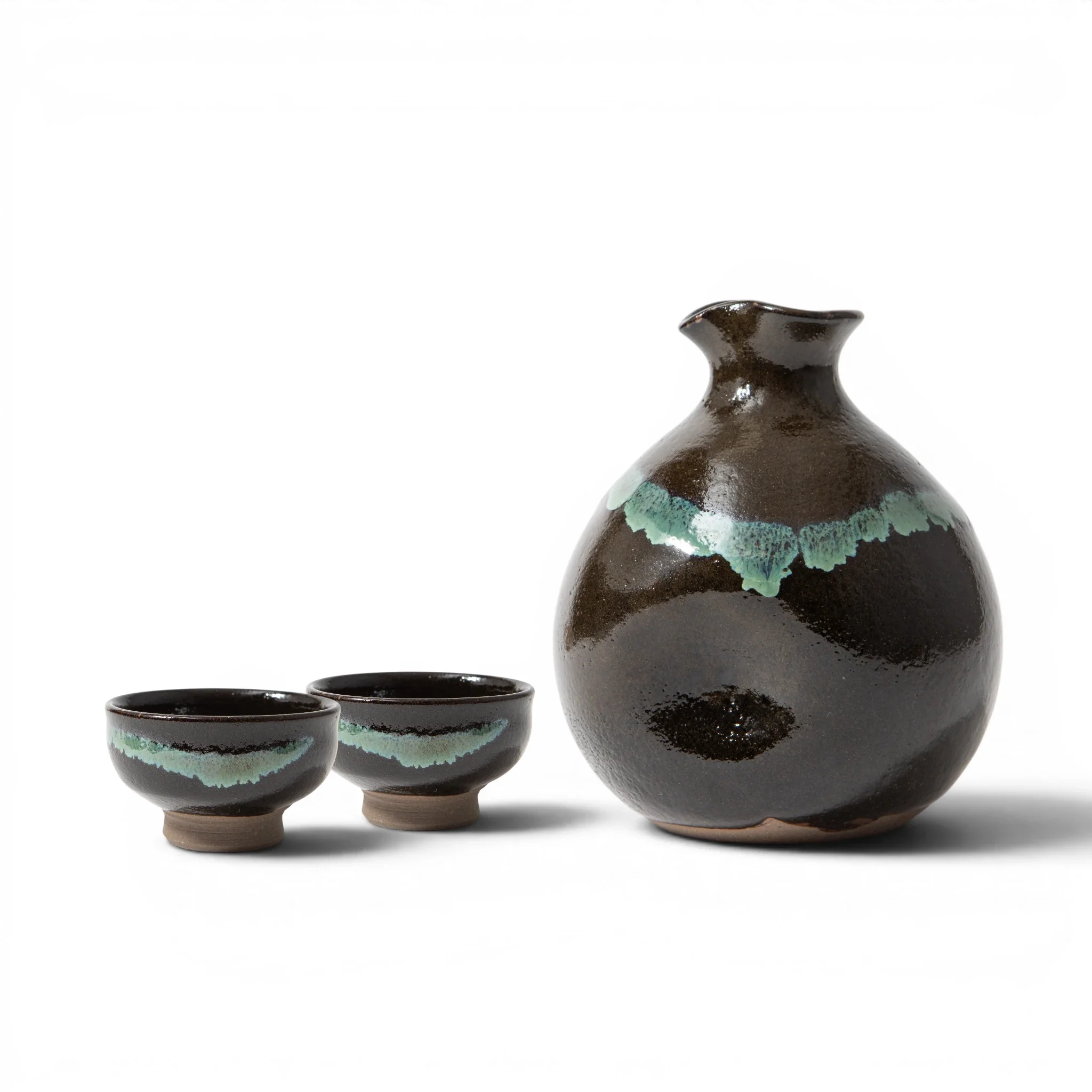
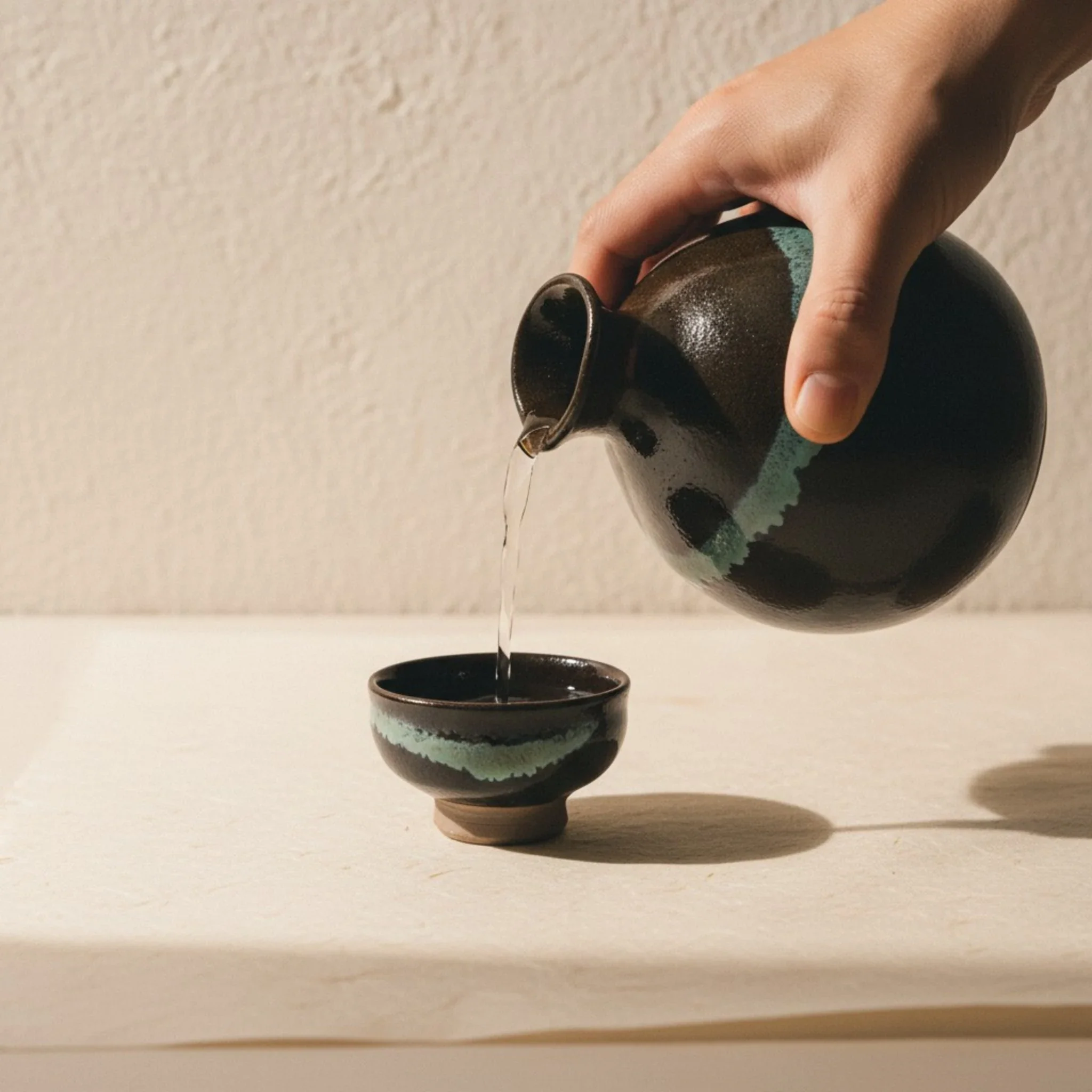
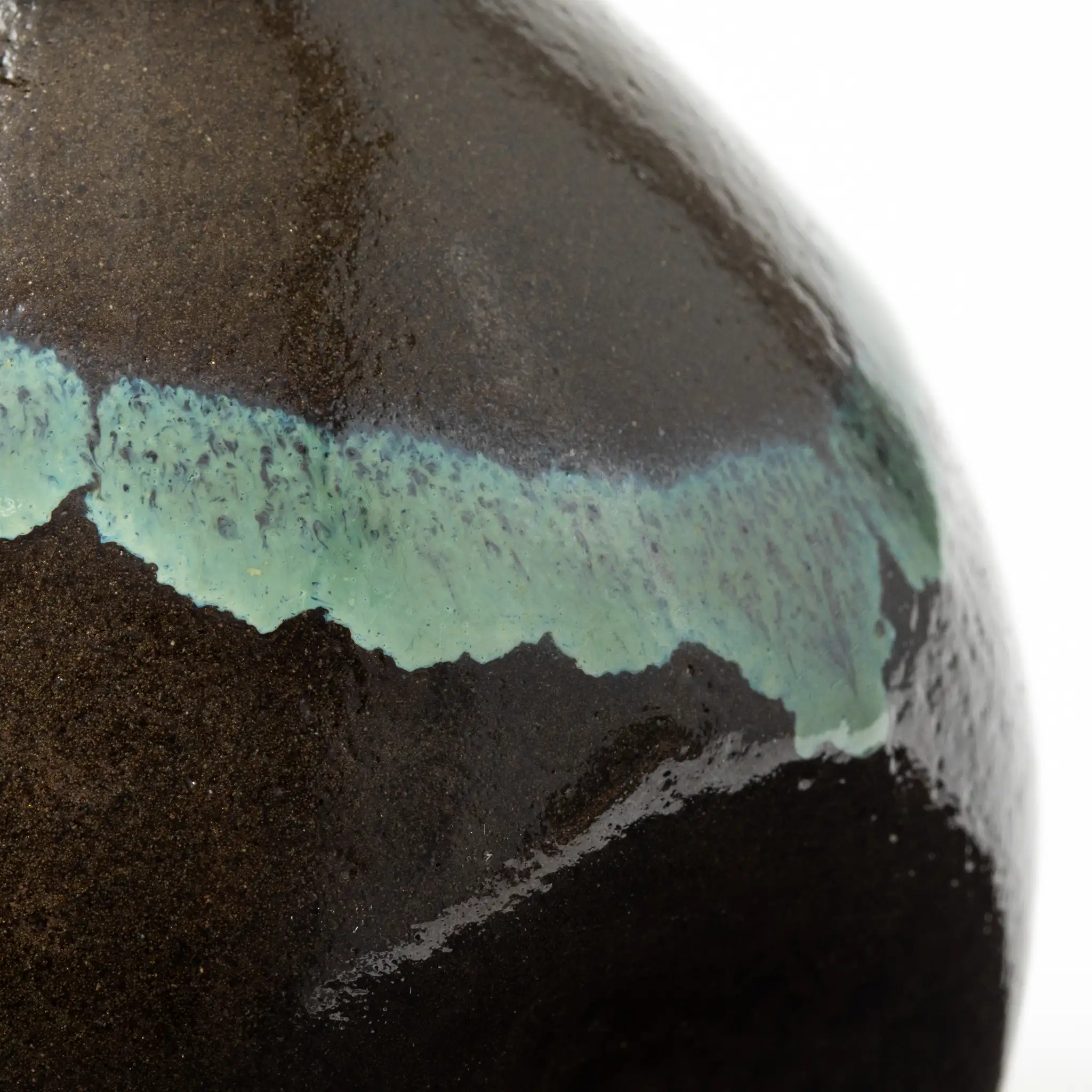
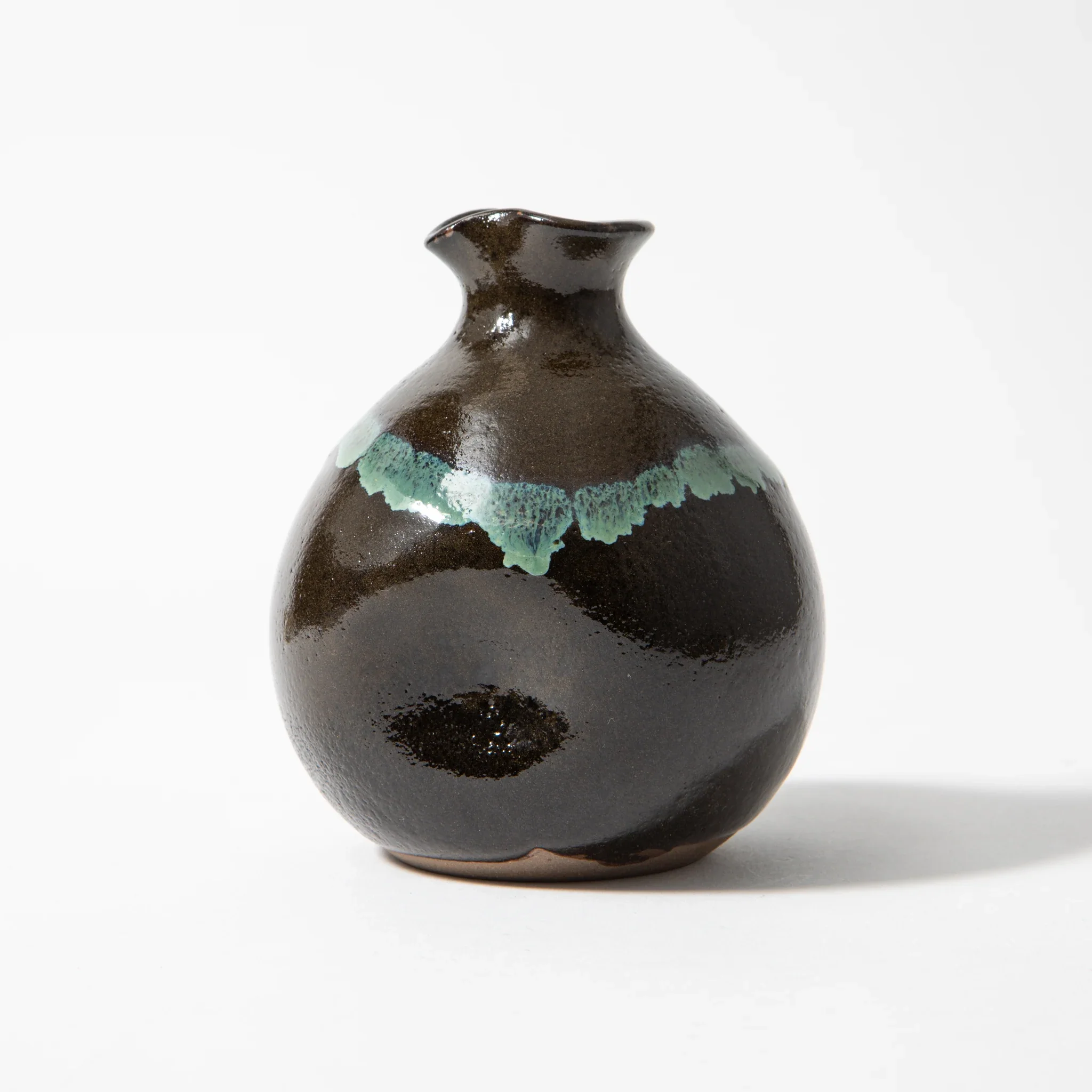
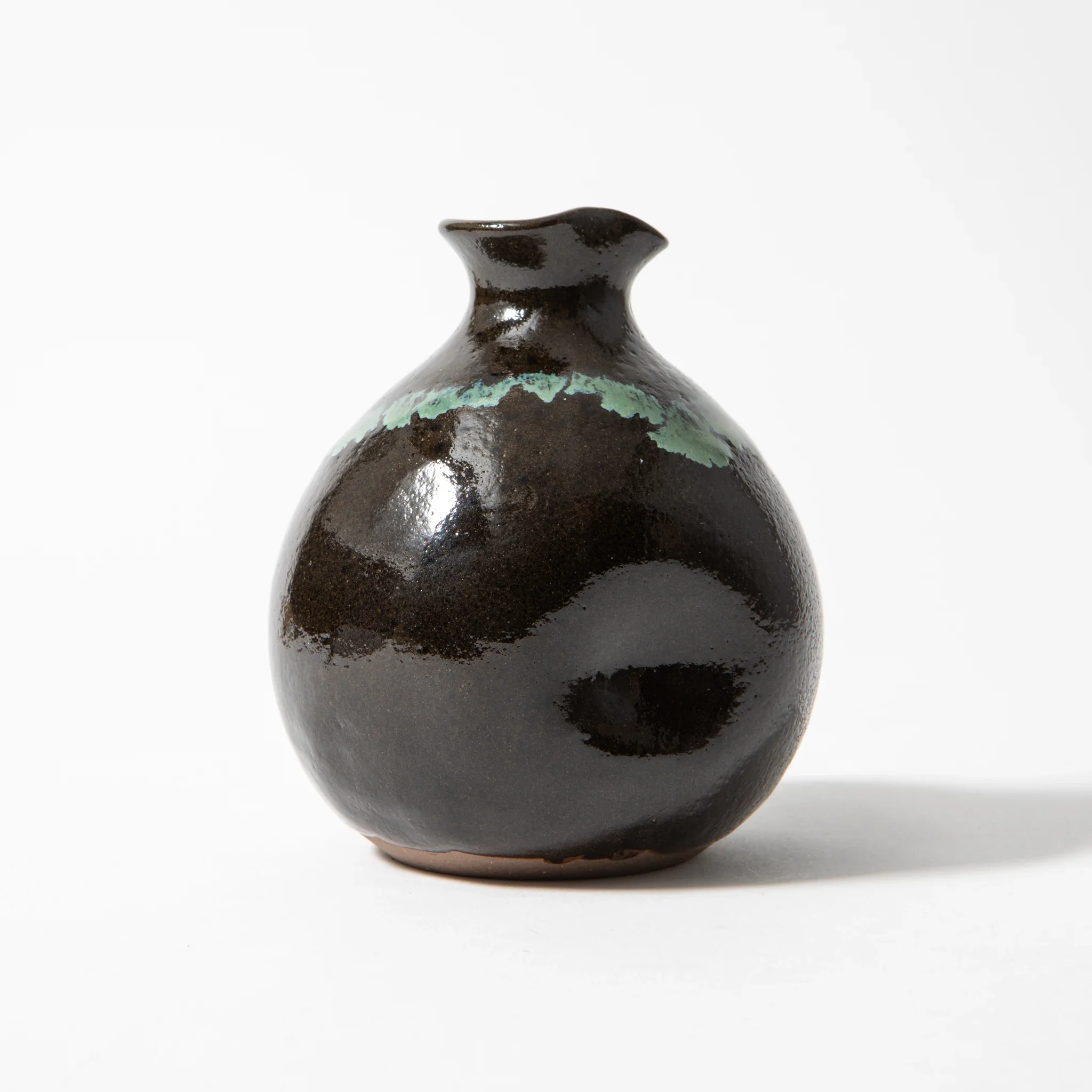
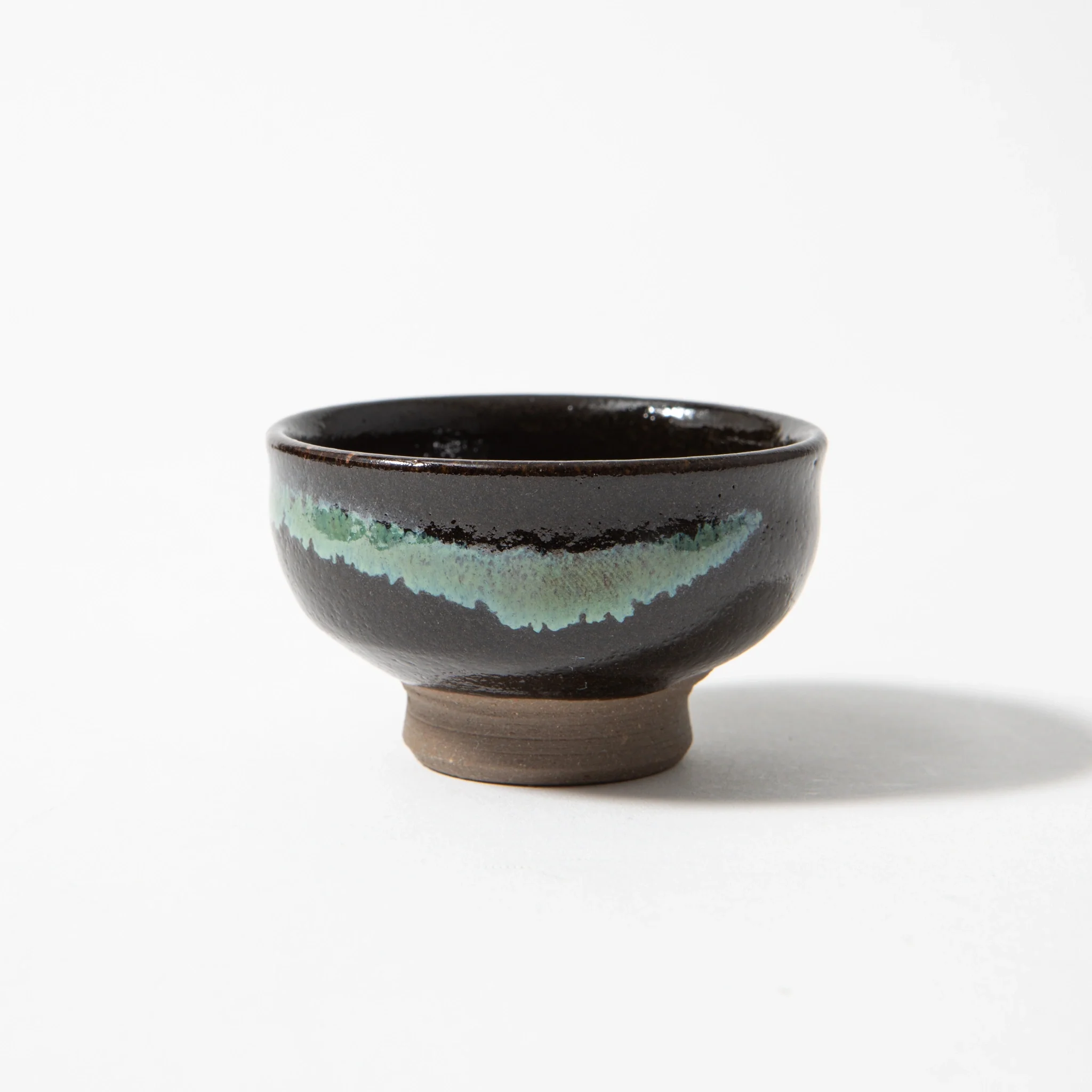
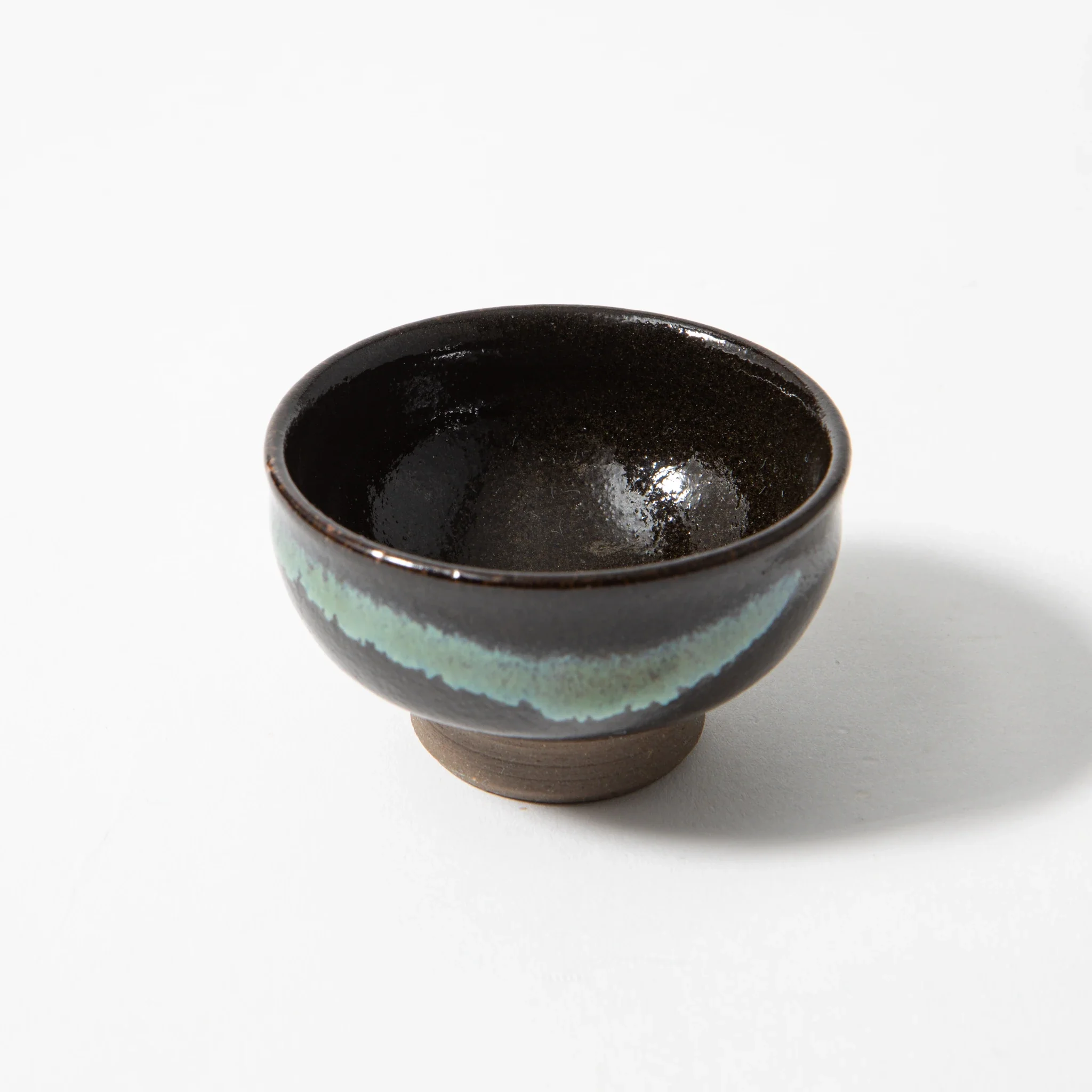
The tokkuri (sake carafe) is one of the more considered objects in Japanese ceramic tradition — a vessel whose weight, surface, and pour all register in the hand during use. In Ryumonji's kuro glaze, the iron-rich Black Satsuma clay and the black glaze collected from the same Kagoshima mountains fire together into a surface that is dense and deeply reflective, the color varying between near-black and dark brown depending on the light. The kiln was established in 1688 and still processes all its materials locally — a continuity that shows in the glaze's depth, which differs from surfaces produced with commercially mixed materials. On the tokkuri and 2 guinomi (small sake cup) in this set, teal accumulates as a distinct horizontal band across the body of each piece, the secondary glaze pooling where the two materials meet during firing. The band falls at a different position and with a different weight on every piece. The foot of each guinomi is left unglazed, the dark clay visible at the base.
Original: $325.00
-65%$325.00
$113.75Product Information
Product Information
Shipping & Returns
Shipping & Returns
Description
The tokkuri (sake carafe) is one of the more considered objects in Japanese ceramic tradition — a vessel whose weight, surface, and pour all register in the hand during use. In Ryumonji's kuro glaze, the iron-rich Black Satsuma clay and the black glaze collected from the same Kagoshima mountains fire together into a surface that is dense and deeply reflective, the color varying between near-black and dark brown depending on the light. The kiln was established in 1688 and still processes all its materials locally — a continuity that shows in the glaze's depth, which differs from surfaces produced with commercially mixed materials. On the tokkuri and 2 guinomi (small sake cup) in this set, teal accumulates as a distinct horizontal band across the body of each piece, the secondary glaze pooling where the two materials meet during firing. The band falls at a different position and with a different weight on every piece. The foot of each guinomi is left unglazed, the dark clay visible at the base.